Events & Weddings
Saturday Wedding Venue Sonoma: Booking Guide
September 17, 2026
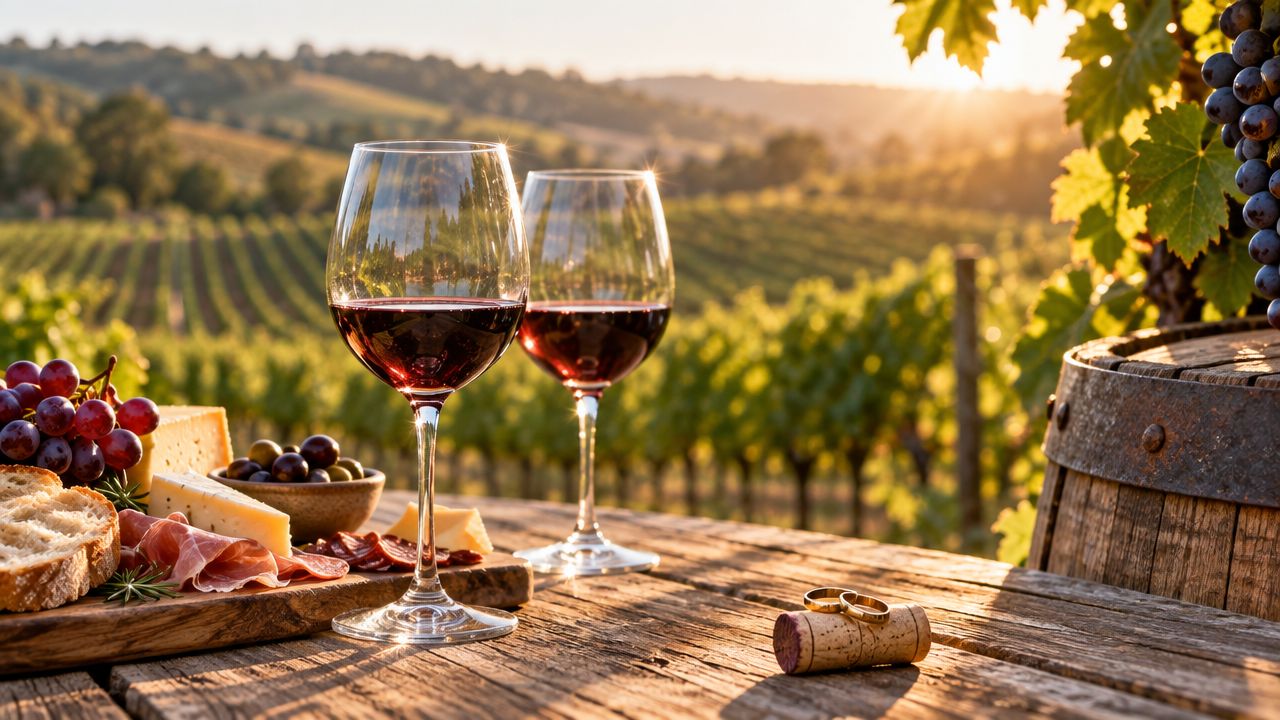
You're trying to land a Saturday wedding venue in Sonoma, and the first hard truth is simple, the good dates go fast, the prettier spaces cost more, and the hidden logistics show up right after the deposit clears. If the plan is a peak-season Saturday in wine country, the smart move is to treat the venue search like a high-stakes scheduling problem, not a casual tour list.
Understanding the Sonoma Saturday Wedding Market
Sonoma does not behave like a bargain market, and couples should stop treating it that way. In 2025, the Sonoma, CA wedding market included 2,765 weddings, with couples spending an average of $48,275 per wedding and total spending reaching $133,480,375 (Sonoma market data). A Saturday inquiry sits inside that premium reality from the start, because the venue is not just selling scenery, it is competing for a share of a destination market that pays for timing, privacy, and ease.
What those numbers mean for couples
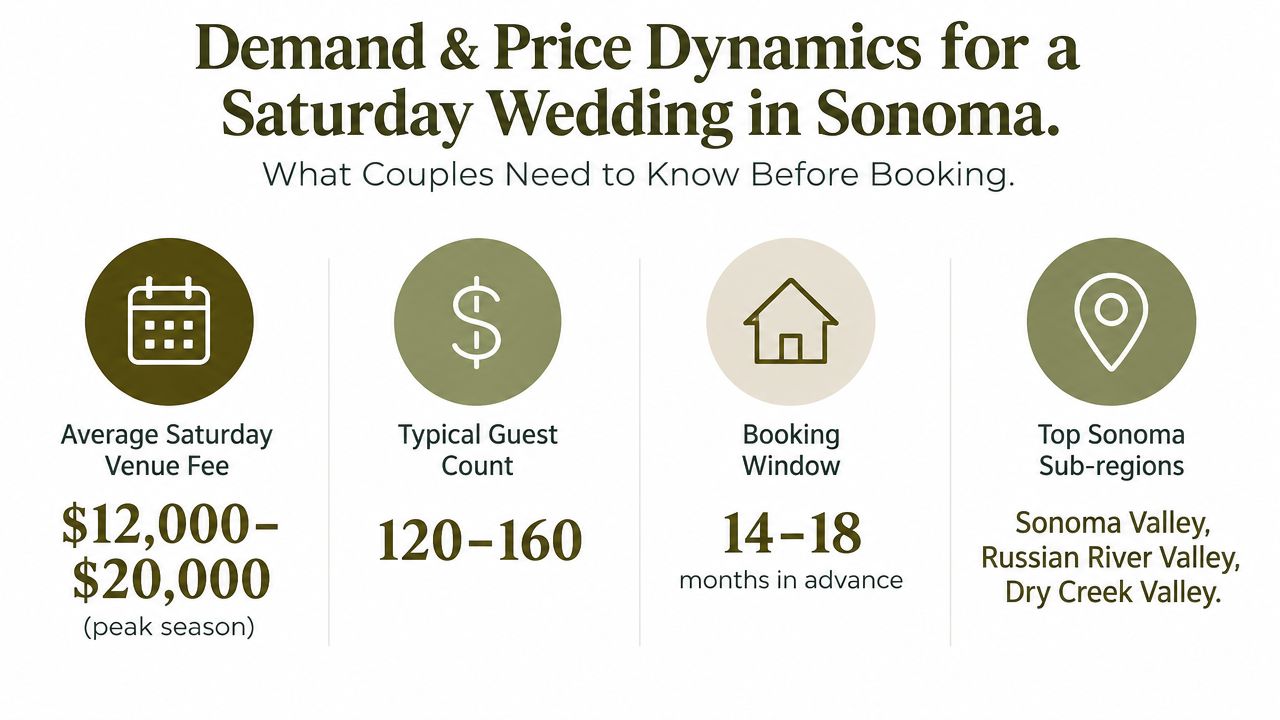
The average guest count in Sonoma was estimated at 118 to 128 guests. That points to mid-sized celebrations, which need more than a pretty view. A venue has to handle ceremony flow, dinner service, movement between spaces, late arrivals, and the kind of hospitality that keeps a larger group comfortable instead of crowded.
Saturday is where the budget pressure shows up fast. Venue-booking data says Saturdays are the most sought-after wedding day in Sonoma, and venue rentals average $333 per hour, with larger venues averaging about $434 per hour (Sonoma venue data). The same data says Wednesday and Thursday bookings are 19% cheaper on average than weekend dates, which makes the Saturday premium impossible to ignore.
Build the budget around weekend pricing from the beginning. Do not wait for the quote to force the issue.
The question is not whether the property looks beautiful. It is whether the space earns its premium through guest flow, flexibility, and a reception that feels worth the spend. Couples should start with broader venue context, such as the Sonoma Valley wedding venues overview, then narrow to the exact Saturday that fits the guest count and the overall plan.
Weekend experience matters after the ceremony too. A venue that leaves room for professional wedding dance coaching gives the couple a stronger first dance and gives the room a better start to the night.
Strategic Timelines for Securing Peak Season Dates
A couple falls in love with a Sonoma Saturday, then learns the hard part is not the mood, it is the calendar. Peak-season dates get claimed early, and once a venue's Saturday inventory is gone, the rest of the plan starts bending around whatever is left. For Sonoma's May through October season, serious couples should be locking dates 14 to 18 months ahead, and some properties need even earlier commitment depending on guest count and layout.
A clean booking sequence
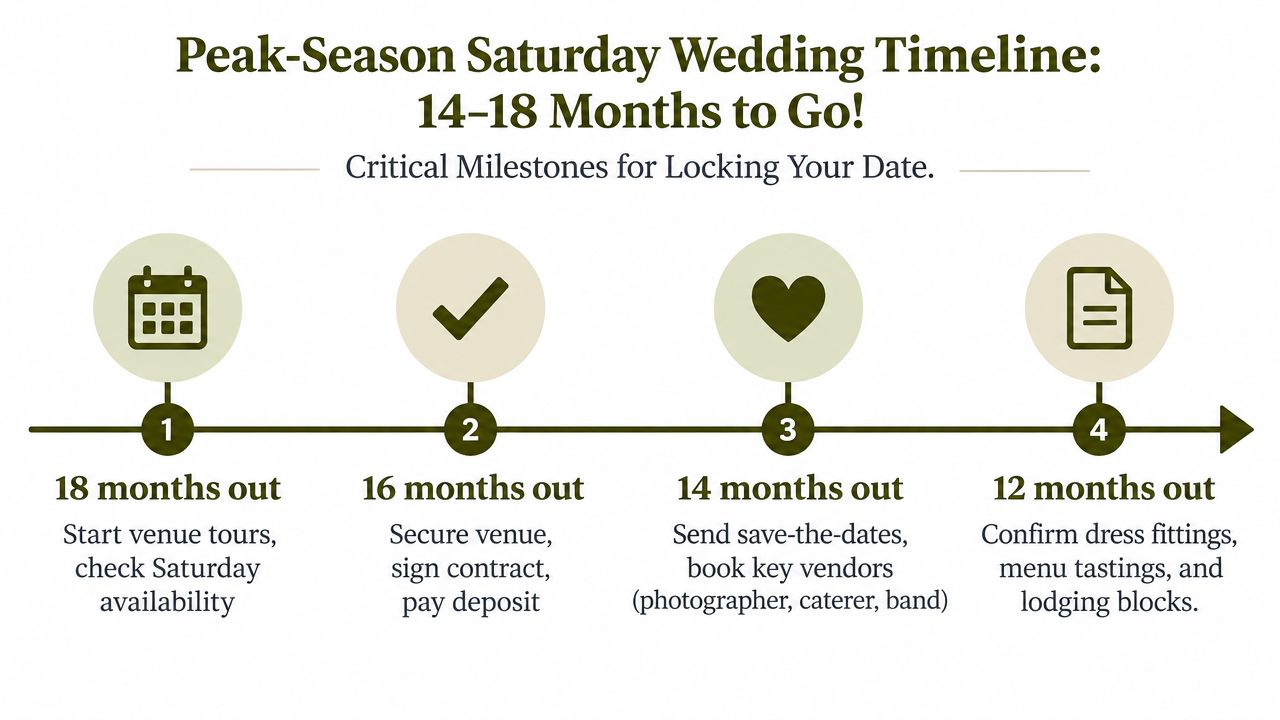
Start with the Saturday, not the décor. At 18 months out, tour venues and ask the date question first. At 16 months out, move decisively if the property fits, because hesitation usually costs the exact view, room flow, or weekend you wanted. By 14 months out, save-the-dates should be moving and the core vendors should already be under contract. By 12 months out, the operational work gets tighter, from fittings to lodging blocks, because every one of those choices depends on the venue being secured.
Good planning is not about being early everywhere. It's about being early on the decisions that can't be recovered later.
A weekend wedding demands a stronger calendar than a single-day event. Use the essential wedding preparation timeline as the backbone, then work the Sonoma venue decision into that framework so vendor booking, guest communication, and lodging planning all move in the same direction. If the Saturday date drives the rest of the plan, the rest of the plan stays manageable.
Once a couple is serious, stop browsing and make the inquiry. A direct private event request gets the conversation started about availability, package structure, and the logistics tied to that exact weekend. That is where the schedule stops being theoretical.
What to do when the Saturday is already popular
If the first-choice venue is gone, do not drift into a weaker second pick just because it is open. Keep the same guest count, the same hospitality standard, and the same expectation for how the property has to work over a full weekend. A generic substitute usually creates more compromise than savings.
The couples who secure peak Saturdays usually do three things well. They tour with deposit readiness, they have family decisions settled, and they know what kind of weekend they want before they start asking for dates. In Sonoma, that clarity matters more than wishful planning.
Evaluating Vineyard Estates and Weekend Guest Experiences
A scenic vineyard is not enough. A real Saturday venue in Sonoma has to carry the whole weekend without making guests feel rushed, stranded, or squeezed into a pretty backdrop. Couples planning Friday welcome dinners, Saturday ceremonies, and Sunday farewell brunches need a property that feels like a destination, not a rented stage.
What separates a destination estate from a photo op
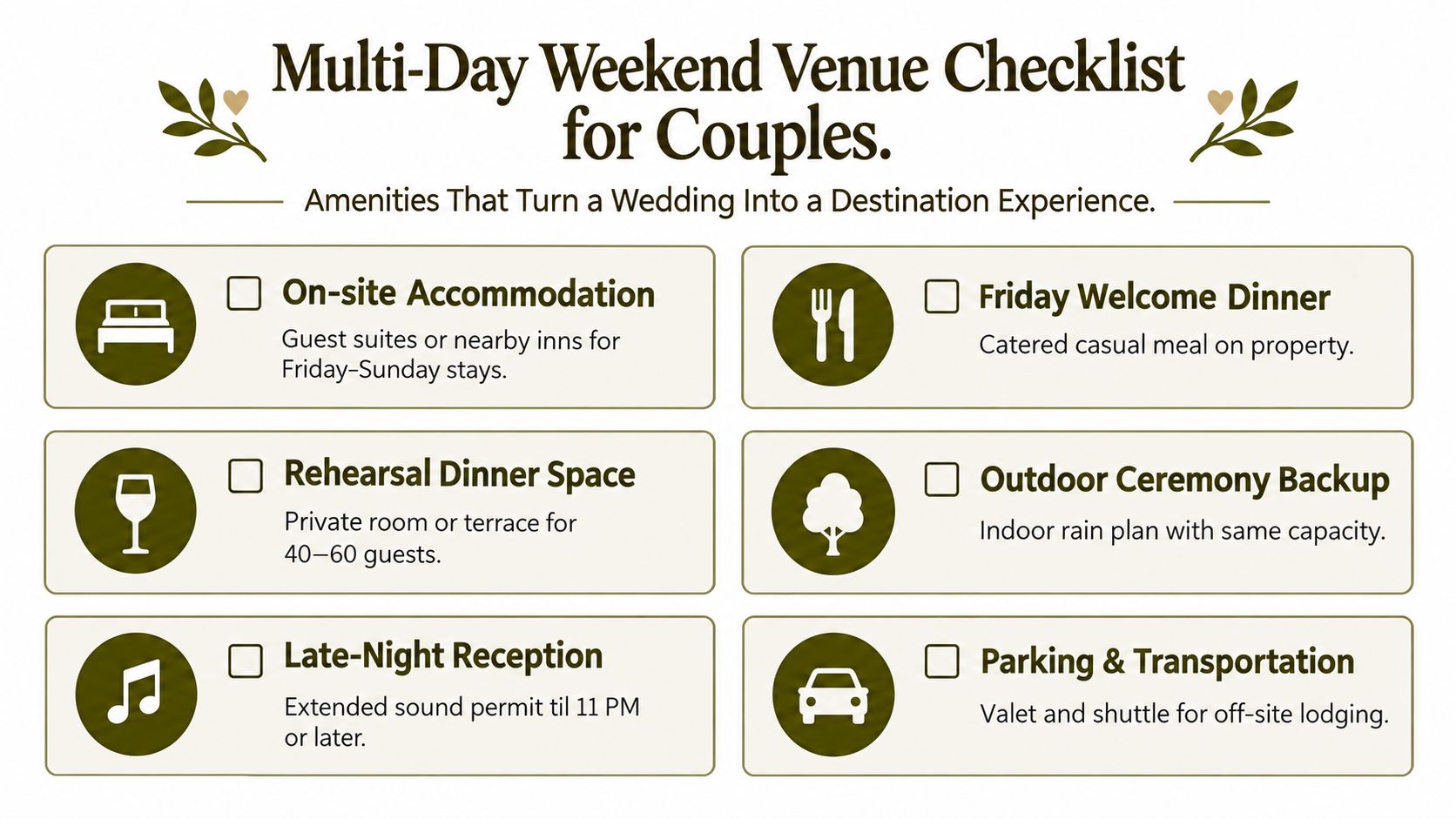
The estate layout has to support the full weekend, not just the ceremony moment. Look at arrival flow, guest parking, walking paths for older relatives, and whether the property leaves enough room for a Friday dinner or a relaxed daytime gathering. If guests have to shuttle constantly, climb too much, or wait around for every transition, the venue starts feeling like logistics instead of hospitality.
Ask direct questions on the site visit.
- Where do guests gather on Friday? A good property has a real answer, not a leftover corner.
- What happens if the ceremony weather shifts? A backup plan only matters if it protects the guest experience.
- Can people stay connected on-site? If lodging is off-property, transportation and parking need to be sorted cleanly.
- Does the estate have daytime texture? Tasting rooms, patios, and shaded gathering spaces make the weekend feel complete.
Strong venues don't just host the wedding hour, they carry the weekend.
Personality matters because guests remember how a place feels, not just how it photographs. A venue with history, music, or a distinct story gives the weekend more weight, especially for couples who want the property itself to be part of the celebration. For a closer look at how private event flow works on a wine estate, the winery private events guide is worth reading.
That character also changes the guest experience in practical ways. A property with wine tasting, a comfortable gathering area, or a story people can talk about creates more dimension across the weekend. A generic scenic backdrop can look beautiful and still feel forgettable. A real estate narrative gives the celebration a pulse, and that is what makes a Saturday in Sonoma feel worth the premium.
Coordinating Vendors and Navigating Valley Logistics
Sonoma vineyard weddings look effortless when they're done right, but the behind-the-scenes coordination is absolutely not effortless. The property might be stunning, but if the load-in route is awkward, the power plan is weak, or the music setup doesn't fit the site, the wedding becomes harder and more expensive than it should be. That's the part couples miss when they focus only on view and capacity.
The first thing to sort out is whether each vendor can work on the property without improvising. Caterers need a usable prep path and a realistic service zone. Rental crews need space for delivery and breakdown. Musicians need a setup that fits the site's sound expectations, not just the couple's playlist. If a vineyard sits on a valley-floor layout, that can help with access, but it still doesn't solve every operational issue on its own.
Questions that should be asked before any contract is signed
- Where does equipment load in? Heavy items need a direct, sensible path.
- What powers the event? Any outdoor setup should have a clear energy plan.
- How does sound stay controlled? Live music and quiet surroundings need boundaries.
- Where do guests move after dinner? The transition from meal to dancing should be easy, not awkward.
- Who owns the rain call? That decision needs to be defined in advance.
A good vendor team asks these things early because Sonoma properties vary a lot in how they handle delivery, staging, and guest movement. The couple should be suspicious of anyone who glosses over logistics with vague reassurance. A pretty floorplan is not the same thing as a workable event plan.
If a venue cannot explain how the caterer, band, and rental crew move through the property, the couple is still shopping for a fantasy, not a wedding.
This is also where line-item clarity matters. Some venues are set up for a true event day, others need outside partners to fill basic gaps. Those gaps don't ruin a wedding, but they do change the budget and the stress level. The safest approach is to ask operational questions before falling in love with the view.
The B.R. Cohn Winery Experience and Musical Heritage
B.R. Cohn Winery stands out because it gives couples something most scenic Sonoma properties don't, a built-in story. Founded by Bruce Cohn, longtime manager of The Doobie Brothers, the estate carries a real rock-and-roll legacy, and that kind of identity changes the mood of a wedding immediately. Guests aren't just looking at vines, they're stepping into a property with cultural memory.
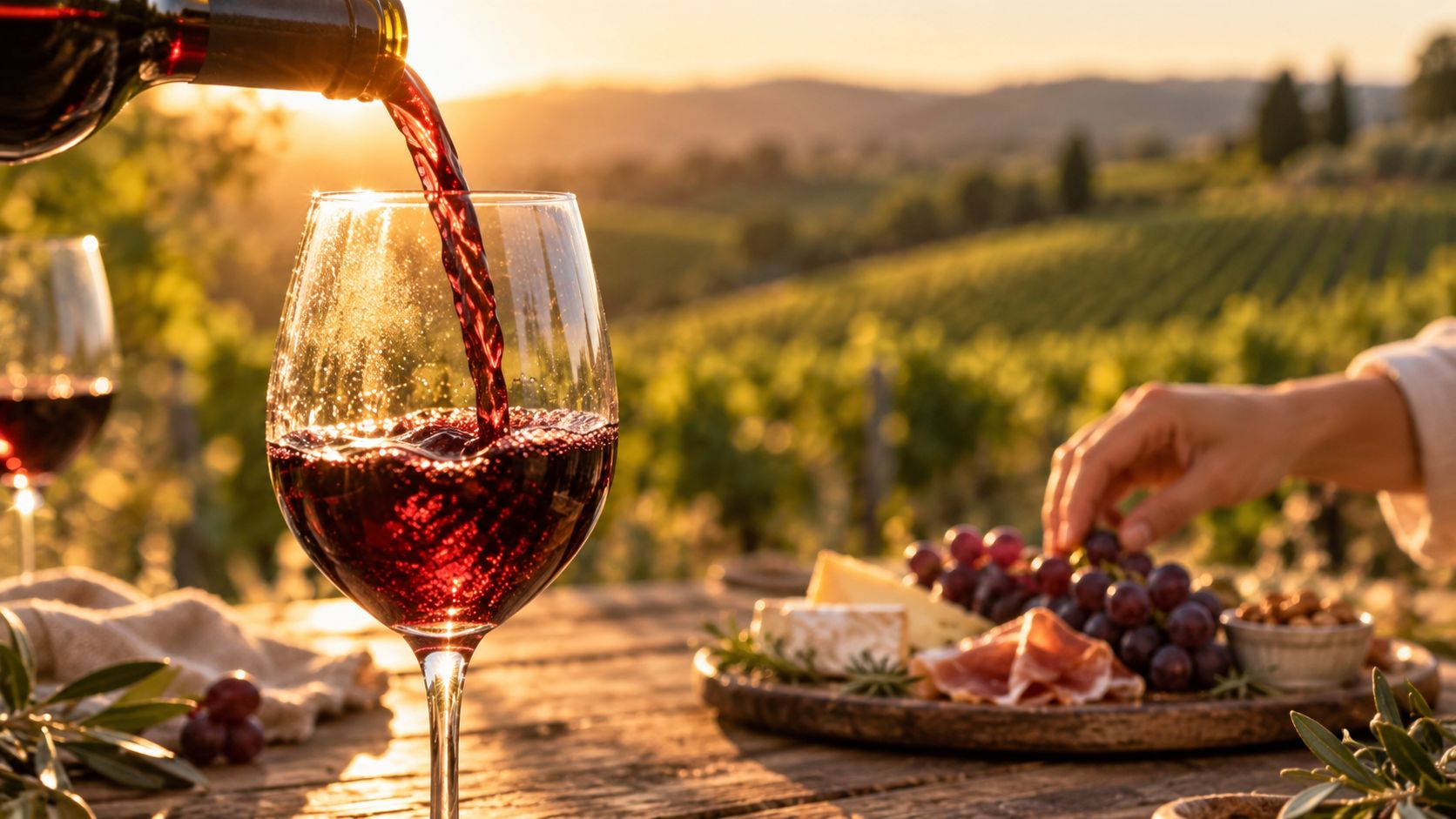
Why story matters more than scenery alone
A lot of venues in wine country offer a beautiful view. Fewer offer a reason for the space to feel alive. That difference matters because a Saturday wedding is not just a ceremony, it's a hosted experience, and personality-driven estates make the reception feel grounded instead of generic. B.R. Cohn's music history gives planners a ready-made conversation point, which helps the whole weekend feel less like a rented room and more like a destination with an actual identity.
The estate also fits the practical side of a Sonoma wedding. It offers tasting experiences on site and highlights estate wines rooted in old-vine Zinfandel and Cabernet Sauvignon, which means the property already knows how to host wine-centered gatherings. For couples who want the weekend to feel cohesive, that matters more than one extra photo spot does.
There's also a booking advantage. The publisher notes that B.R. Cohn has meaningful Saturday wedding availability, which is exactly the kind of inventory advantage couples should care about in a market where Saturdays are the hardest dates to secure. When a venue combines availability with a distinctive story, it becomes more than a fallback option.
For couples trying to plan their wedding photography around the property, the right advice is to look for light, movement, and meaningful corners, not just a single hero backdrop. A practical essential wedding photo advice resource can help couples think through those moments in advance, but the venue still has to give photographers a strong setting to work with.
The comparison point is simple. A generic scenic estate gives a nice picture. A venue with musical heritage, tasting culture, and usable Saturday inventory gives a better guest experience and a more memorable wedding weekend. That's the stronger choice.
A more detailed venue comparison is available in the B.R. Cohn vs. Benziger Winery discussion, but the larger point holds without comparison shopping, story-rich properties make the whole event easier to remember.
Finalizing Contracts and Negotiating Peak Season Terms
A Saturday contract in Sonoma should be read like a business agreement, because that's what it is. The couple is securing a rare date, paying for access, and taking on weather, timing, and vendor coordination risks at the same time. That means the contract needs to be clear about what the venue fee covers, what it doesn't, and what happens if the plan changes.
The first thing to check is the cancellation language. If the deposit is nonrefundable, that needs to be understood before anyone signs. The second is the weather contingency, especially for outdoor vineyard ceremonies where the indoor fallback must fit the guest count and the event flow. The third is overtime, because a Saturday reception that runs long can become expensive fast if the rules aren't spelled out.
The contract details that deserve attention
- Included spaces: Confirm exactly which ceremony, cocktail, and reception areas are part of the fee.
- Time limits: Find out when access begins and when load-out ends.
- Overtime charges: Ask how additional hours are priced before they are needed.
- Vendor restrictions: Clarify whether outside caterers, bands, or rental companies are allowed.
- Rain plan: Make sure the backup setup feels intentional, not improvised.
- Parking and transport: Verify whether the venue expects shuttles, valet, or both.
If a detail affects guest comfort or event timing, it belongs in the contract, not in a verbal promise.
The venue fee can be misunderstood. It is only one part of the budget, and it should never be treated as the full price of the wedding weekend. That's especially true for Saturday wine-country events, where catering, bar service, staffing, and logistics all stack on top of the site rental. A clear contract doesn't make the wedding cheaper, but it does make the bill predictable.
The cleanest move is to use the venue's private events page as the final confirmation point, then ask every remaining question before signing. Once the contract is set, the couple can stop shopping and start planning the parts that shape the guest experience.
If the goal is a Saturday wedding with real Sonoma character, B.R. Cohn Winery deserves a serious look. It combines estate wine, musical heritage, and Saturday availability in a way that fits the weekend-heavy way couples are planning now. Visit B.R. Cohn Winery to see whether the property matches the guest experience, timeline, and celebration style the wedding needs.
Visit Us
Come taste with us.
Book a guided tasting on the estate in Glen Ellen, or drop by for wines by the glass under the olive trees.
Plan Your Visit

